
Explore spaces
Explore collections
Explore product type
A Spark of Change: Understanding the latest emergency lighting recommendations
The updated BS 5266-1:2025 isn’t just about making sure people can find the door when the power cuts out. It’s a more comprehensive approach to safety in modern commercial buildings and commercial spaces and guidance on how emergency lighting technology can keep us safer.
Here’s a brief breakdown of what the recent changes mean for your next project.
The biggest shift is that the standard now looks beyond just “escaping”. It has been expanded to include safeguarding building occupants when normal lighting fails. So your emergency lighting design plan now needs to include:
- Emergency Escape Lighting: To assist in evacuation, with illumination to guide people to exits in an emergency
- Local area lighting: This ensures people staying in the building can finish specific tasks safely if the power fails.
- Standby lighting: This is designed so normal activities don’t have to stop just because the main power supply is down.
- Greater resilience: In high-risk areas, lights should now be wired from at least two separate circuits, with no more than 20 lights being affected by a single circuit fault.
The 2025 update provides a clear framework of where emergency lighting is required, including:
- Workplaces: Offices, warehouses, and industrial sites.
- Public Spaces: Schools, universities, hospitals, and healthcare buildings.
- Hospitality: Hotels, restaurants, and bars.
- Residential: Communal areas in multi-occupancy buildings or apartment blocks.
Requirements for specific areas like kitchens, plant rooms, and even swimming pools now have updated “lux level” requirements (a measure of light intensity) to ensure they are bright enough during an emergency. For example, escape routes at floor level must now provide at least 1 lux of horizontal light. And emergency lighting is required for areas larger than 60 sq m if an escape route passes through it.
Emergency lighting is vital in any public and commercial space and so a thorough and comprehensive risk assessment is required to form the basis of emergency lighting design, along with a series of testing requirements. The new recommendations stipulate that:
- Battery life: Self-contained batteries are expected to last at least four years and should be monitored by automatic test systems.
- Five-year check: Every five years, you must perform a full mandatory test of the light levels and performance to ensure they still meet the original design.
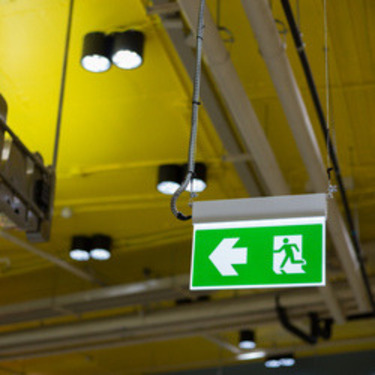
When it comes emergency lighting signage, one of most common questions, for both installers and building users, is about the emergency exit signs themselves: “What do the arrows on the exit signs actually mean?” This is something everyone should know in order escape a building safely in the event of a power cut or emergency – so here goes:
- Arrow Up: Proceed forward or go “straight on” (often used above doors). It can also mean move upwards.
- Arrow Down: Indicates that you should proceed down a level, such as descending stairs or a ramp.
- Left/Right: Turn in that direction to find the escape route
And a sign without an arrow usually means the final door leading to safety!

Related products
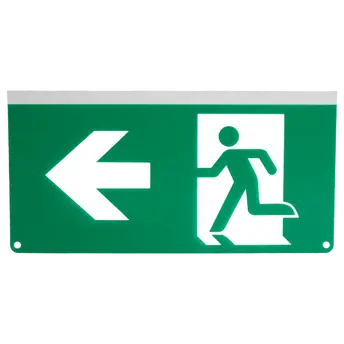
Suspended Emergency Exit Sign - Arrow Left/Right Legend
Subscribe to our newsletter
Get monthly news, tips, and new product updates delivered straight to your inbox.
Email addresses are never sold or given out to anybody. By subscribing, you agree to our Privacy Policy and Terms.